Eating in Siem Reap: From Street Food to Expat Groceries
Facts checked 4 October 2026 — Grocery retailers and travel-health guidance were checked by opening the operator's or agency's own website on 4 October 2026. Price figures are crowd-sourced examples from Numbeo dated September 2026 and are indicative only. Availability of specific imported products changes constantly and is never guaranteed.
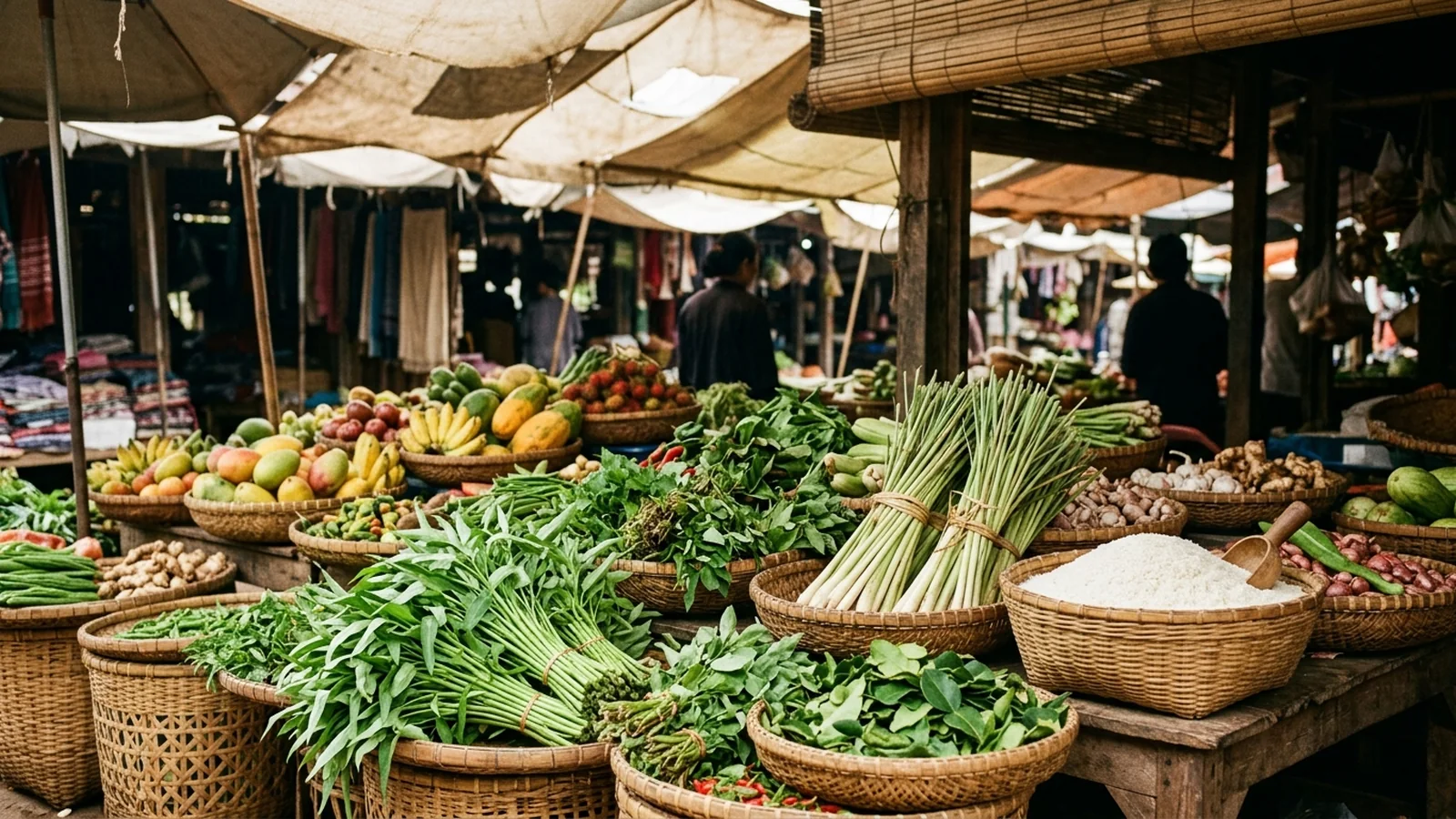
Eating well in Siem Reap is easy; eating exactly what you ate at home is harder. Khmer cooking is built on rice, freshwater fish, fresh herbs and generous use of fermented seasoning, and it is one of the great pleasures of living here. Imported groceries exist and are getting better, but availability is uneven and the range is never guaranteed. This guide covers both halves of the picture, and marks clearly what is an example rather than a promise.
What Khmer food culture looks like
Cambodian food is lighter and less sweet than some of its neighbours. Rice is the foundation of almost every meal. The signature flavours come from prahok (fermented fish paste), kroeung (a herb paste of lemongrass, galangal, turmeric and garlic) and a heavy hand with fresh herbs.
Dishes worth knowing early:
- Fish amok — a steamed, coconut-and-kroeung fish curry, often called the national dish
- Bai sach chrouk — grilled pork with rice, the classic breakfast
- Nom banh chok — rice noodles with a fish-and-herb gravy, usually a morning dish
- Kuy teav — a clear pork or beef noodle soup
- Lok lak — stir-fried beef with a peppery lime dip
Breakfast is eaten early and out of the house as often as at home, which is why the mornings are the best time to eat cheaply and locally.
Markets: where most of the cooking happens
Siem Reap's markets are the practical heart of everyday food. The Old Market area near the river is the familiar one for visitors, selling produce, dry goods and prepared food; Psar Leu, the larger local market further out on National Road 6, is where many residents shop for meat, fish and vegetables.
A few habits make market shopping easier: go early, when produce is freshest; bring small notes and coins in riel; and expect prices for foreigners to start a little higher than the local rate. Wash produce in clean water at home, and if you are nervous about raw meat handled at ambient temperature, that instinct is a healthy one.
Imported groceries — real, but never guaranteed
If you want olive oil, cheese, pasta, proper coffee or gluten-free staples, Siem Reap can usually supply them. It cannot promise that a specific brand will be on the shelf this week.
Lucky Supermarket is the large national chain, with a stated mix of local and imported products — the most predictable general option.
A second category is the long-established Cambodian importer: companies here have supplied international groceries for decades and distribute to every province. One caveat applies to the best-known names — the supermarket branches they advertise are in Phnom Penh. Their goods still reach Siem Reap through retail and wholesale channels, but do not assume a local branch carrying the full Phnom Penh range.
Angkor Market is widely recommended by residents for imported groceries and is a familiar name in town. We could not find an operating website for it, so we are not making claims about its current stock or hours — treat it as somewhere to visit and judge for yourself.
The pattern to internalise is this: imported goods are available, and they cost more than the local equivalent. A litre of imported milk or a kilo of imported cheese can be several times the price of local staples, so most long-stay residents cook local and buy imported items selectively rather than weekly.
Dietary needs, honestly
- Vegetarian and vegan. Very workable. Much Khmer cooking is vegetable-heavy, and many dishes can be made without meat on request. The useful word to know is sach (meat) — ask for a dish without it and be prepared to repeat yourself. At the specialist end, places such as the Hariharalaya retreat near Siem Reap advertise a dedicated vegan kitchen, and expat-facing cafés commonly offer vegetarian options.
- Gluten-free. Manageable but not straightforward. The rice-based diet works in your favour, but soy sauce, fish sauce and many marinades contain wheat, so cross-contamination is a real risk. Imported gluten-free bread and pasta are available in the larger stores, usually at a premium.
- Halal, allergies and other needs. Options exist but are limited, and clearly communicated allergen information is not universal. If you have a serious allergy, keep a translated card and favour places that can answer specific questions.
Eating out
The range is genuinely broad: street stalls, family-run Khmer kitchens, and a cluster of social-enterprise and expat cafés. Sister Srey Cafe and Common Grounds Cafe are both long-established social enterprises, and The Little Red Fox Espresso states that it caters to a range of dietary needs. For everyday eating, though, the local stalls and small restaurants remain the best value and the most interesting food.
Food hygiene guidance
The CDC's Cambodia traveller page is the sensible baseline. In practice:
- Drink bottled, boiled or otherwise treated water; avoid tap water.
- Favour food that is freshly cooked and served hot, and be more cautious with pre-cooked dishes left at room temperature.
- Peel fruit yourself, or eat fruit that has been peeled fresh.
- Choose busy stalls with high turnover — a queue usually means food is moving quickly.
- Carry oral rehydration salts; upset stomachs happen to almost everyone at some point.
Street food in a busy market is not inherently risky; food that has been sitting all afternoon is. Use judgement about freshness over the venue's price.
Dated price examples
The figures below are crowd-sourced examples from Numbeo dated September 2026, not fixed prices, and they move with exchange rates and inflation:
- Meal at an inexpensive restaurant: about USD 2.50
- Local draught beer: about USD 1.00
- Cappuccino: about USD 1.65
- White rice, 1kg: about USD 0.91
- Local cheese, 1kg: about USD 15.33
The pattern is consistent: local food and local staples are cheap; imported items are not. A balanced weekly shop will usually mix both.
Where VillageLife fits
VillageLife is a project in development in Siem Reap, and memberships are not open yet. Nothing here depends on us: the markets, the supermarkets and the kitchens above are part of the city as it is today. We mention food because a place to cook, share meals and shop well is part of what makes a longer stay work — and we would rather describe the real options than dress up a plan as a promise.
Sources
- Cambodia - Traveler view — US Centers for Disease Control and Prevention (CDC) (checked 2026-10-04)
Official travel-health page used for food- and water-safety guidance and current health notices (including a global dengue advisory updated 3 September 2026). - Lucky Supermarket — Lucky Supermarket (DFI Lucky) (checked 2026-10-04)
Operator's own site (home and about pages, opened 4 October 2026): a large Cambodian supermarket operator with a stated range of fresh, local and imported products. A specific store count is not published on the site, so no store number is claimed in the article. - Cost of Living in Siem Reap — Numbeo (checked 2026-10-04)
Crowd-sourced price data dated September 2026, used only to give indicative examples of everyday grocery and dining costs. - The Little Red Fox Espresso Cafe — The Little Red Fox Espresso Cafe (checked 2026-10-04)
Operator site of a Siem Reap cafe stating it caters to a range of dietary needs — used as an example of the expat-facing dining options in town. - Hariharalaya Yoga & Meditation Retreat — Hariharalaya (checked 2026-10-04)
Operator site advertising 'world-class vegan cuisine' as part of its retreat offering — used as an example of a dedicated plant-based kitchen in the Siem Reap area.
Sources were opened and checked on the date shown. Rules, prices and services change: confirm the current position with the operator or authority before you rely on a detail.