The Expat's Guide to Angkor: Long-Term Temple Passes
Facts checked 4 October 2026 — Ticket types, prices, validity windows, park hours and children's rules were checked against Angkor Enterprise's official ticket page and FAQs on 4 October 2026, and temple visitor rules against the APSARA National Authority code-of-conduct pages. The free one-year 'Special Pass' for long-term residents is confirmed as an official Angkor Enterprise scheme (spass.angkorenterprise.gov.kh); because the eligibility detail sits behind a login, the residence threshold and document list are reported from the September 2022 launch announcement and later coverage rather than an official public page, and are flagged as needing confirmation.
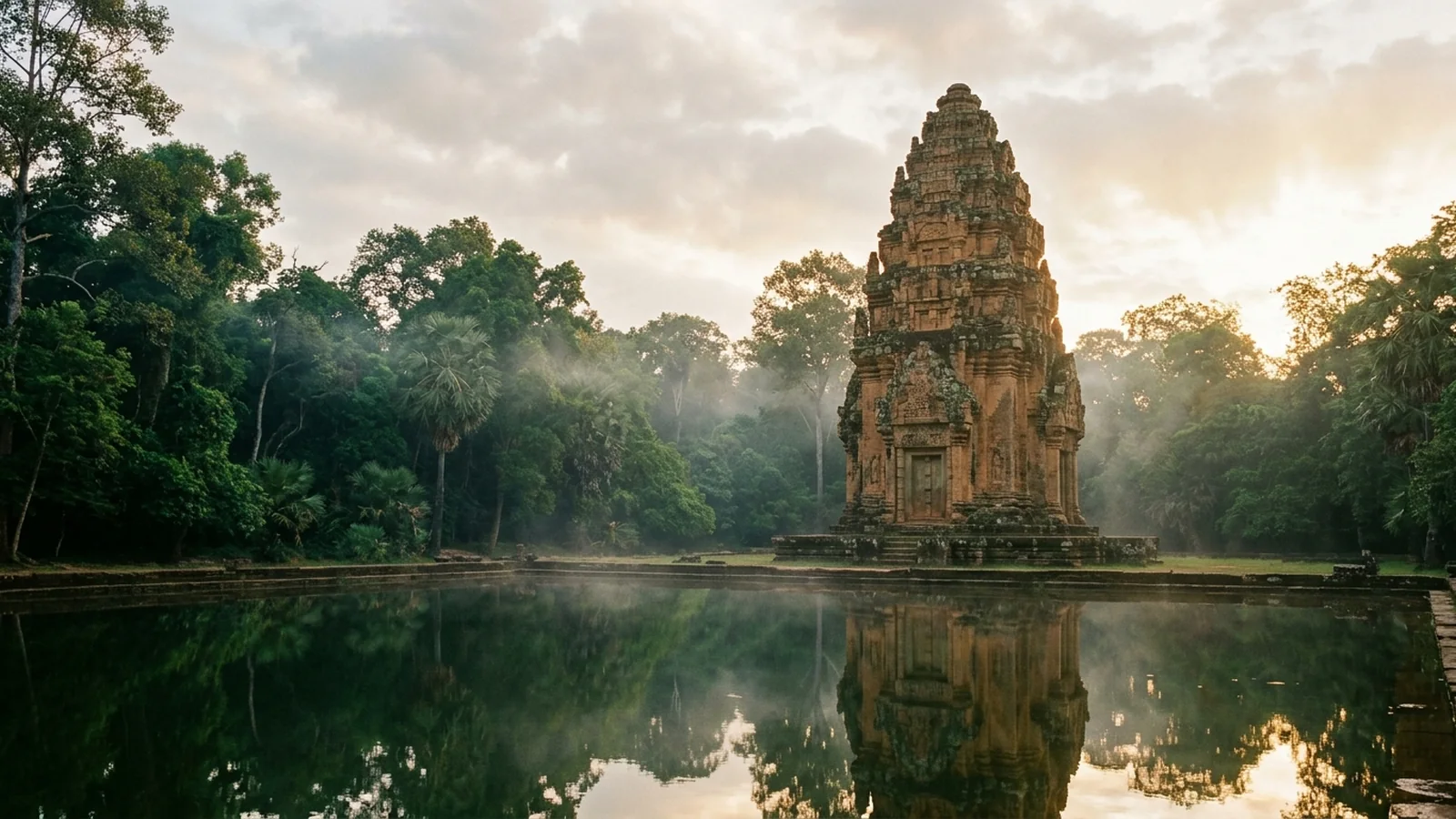
For a visitor, Angkor ticketing is simple: buy a pass, see the temples, go home. For someone living in Siem Reap, two questions matter more — how the multi-day passes behave when you can spread them out, and whether you qualify for the free annual pass the government offers long-term foreign residents. This guide answers both from Angkor Enterprise's own pages, checked on 4 October 2026, and is upfront about the one detail we could not confirm from a public official page.
What an Angkor pass costs
These are the published prices on Angkor Enterprise's official ticket page:
| Pass | Price (USD) | Valid for |
|---|---|---|
| Angkor Temples Park, 1 day | 37 | That day |
| Angkor Temples Park, 3 days | 62 | Any 3 days within 7 |
| Angkor Temples Park, 7 days | 72 | Any 7 days within 30 |
The park opens at 5:00 AM and closes at 6:30 PM. A one-day pass needs no photo; the three-day and seven-day passes require one for identification. Children under 12 enter free without a ticket — carry a passport as proof of age — but they are not permitted to climb Angkor Wat's upper tower, because the steps are open only to visitors aged 12 and over.
Three sites are sold as their own tickets rather than under the Angkor pass: Koh Ker (one day, $15), Beng Mealea ($10) and Kbal Spean ($5). That matters if your weekend plan heads north of the main park.
The multi-day pass is the expat's friend
The reason the three- and seven-day passes suit residents is the wording "any 3 days within 7" and "any 7 days within 30". You do not have to visit on consecutive days. A seven-day pass spread across a month lets you pick a clear-sky morning, avoid a festival crowd, or take a friend who is visiting — and then leave the temples alone for a fortnight. If you live here, buy for the window, not the weekend.
Buy only through official channels
Angkor Enterprise sells through its own website, its mobile app, self-service kiosks, its ticket counter, and licensed tour guides. Its ticket office sits on Road 60, about 4 km from the town centre, open 5:30 AM to 5 PM daily. The official line is unambiguous: tickets bought anywhere other than these channels are not valid at the checkpoints. So treat any tout offering a "discount pass" as a liability, not a bargain.
The free one-year pass for long-term residents
This is the part most expat conversation gets half-right. Angkor Enterprise runs a separate scheme — the Angkor Special Pass — reached through the official portal at spass.angkorenterprise.gov.kh. It is not the standard three-tier pass; it is a free annual pass giving repeated entry to the Angkor park and Koh Ker.
What has been reported about eligibility: the scheme was announced in September 2022 for foreigners who have legally resided in Cambodia for at least two years, applying with a passport and a photograph, and was framed for diplomats, investors, international-organisation staff, foreign workers and their families. The full documentation list and the visa categories that qualify are not published publicly — the application portal is login-gated and Angkor Enterprise's own site carries no eligibility page — so treat any third-party checklist, including ours, as unconfirmed and check with Angkor Enterprise directly. The scheme was announced in September 2022 and was framed for diplomats, investors, international-organisation staff, foreign workers and their families, with online applications opening that month.
Two cautions before you plan around it. First, it is not open to every expat: the two-year legal-residence threshold is a genuine gate, and someone here on a tourist visa will never qualify — the pass is an incentive for settled residents, not a perk for visitors. Second, we could not open an official public page listing the current document checklist, because the detail sits behind the portal's account login. Treat the list above as what the launch announcement and later reporting describe, and confirm your own case with Angkor Enterprise before you assemble paperwork. If anyone promises the pass for a fee, that is not the official process.
Sunrise, sunset and the upper terrace
Angkor Wat opens at 5:00 AM for sunrise, and the park closes at 6:30 PM. One genuinely useful rule from the official FAQ: if you buy a one-day pass for tomorrow after 4:45 PM, you may enter the park that same evening for sunset and still use the ticket across the following day.
The upper terrace of Angkor Wat, the Bakan, has tighter access than the temple below. It does not open for sunrise, and it is closed to children under 12. Access rules there are adjusted from time to time, so confirm on the day with your guide or the ticket counter rather than trusting an old blog post — including this one.
The rules that apply to everyone
Angkor is a living religious site, and APSARA's visitor code of conduct applies to residents and visitors alike. Dress is the first filter: shoulders and knees covered, in clothing that would not look out of place in a working temple. Beyond dress, the code asks visitors not to touch carvings, lean on or climb the monuments, or move stones; it prohibits smoking and littering, and it requires written permission from APSARA for any drone flight. These are not arbitrary restrictions aimed at tourists — they protect a landscape that Khmers still worship in.
A practical checklist for a long stay
- Buy the pass that matches your pattern: a 7-day window if you will return, a 1-day if you will not.
- Carry the physical pass every visit; spot checks happen at the temples.
- Register for the Special Pass only if you have two or more years of legal residence — otherwise use the standard passes.
- Wear covered clothing and shoes you can slip off; many temple platforms require it.
- Start early for light and temperature, not just crowds.
- Use a licensed guide or a booked remork (tuk-tuk) rather than an ad-hoc arrangement.
- Confirm current prices, hours and terrace rules at angkorenterprise.gov.kh before a big day.
Where VillageLife fits
VillageLife is a project in development in Siem Reap. Memberships and crowdfunding are not open yet, and we are not a ticketing agency — we cannot sell you a pass or advise on your individual residence case. What we are designing is the practical side of living here well: documented connectivity, dependable power, workspace, and a community of Members who can share what they learn about places like Angkor. Work out your ticket with Angkor Enterprise; we will help with the rest.
Sources
- Available Tickets — Angkor Enterprise (official ticket office) (checked 2026-10-04)
Lists Angkor Temples Park 1-day US$37, 3-day US$62 (valid 7 days), 7-day US$72 (valid 30 days); park entry 5:00 AM, closing 6:30 PM; plus separate Koh Ker 1-day US$15, Beng Mealea US$10 and Kbal Spean US$5 tickets. - FAQs — Angkor Enterprise (official ticket office) (checked 2026-10-04)
States a photo is required for 3-day and 7-day tickets (not 1-day); children under 12 are exempt and cannot climb the upper tower; a 1-day pass bought for tomorrow after 4:45 PM admits the buyer for sunset that evening; the official ticket office is on Road 60, ~4 km from the centre. - Angkor Special Pass (official application portal) — Angkor Enterprise (checked 2026-10-04)
Confirms a distinct 'Angkor Special Pass' scheme exists and is applied for through this official e-ticket portal. Eligibility detail requires an account, so the criteria are corroborated from the sources below rather than this page. - Foreign residents can now avail free yearly visits to Angkor complex — Khmer Times (checked 2026-10-04)
September 2022 launch report quoting Angkor Enterprise: foreigners resident in Cambodia for two years or more may apply for a free one-year pass to Angkor and Koh Ker, showing passport and photo; online applications opened 9 September 2022. - Code of Conduct — APSARA National Authority (checked 2026-10-04)
APSARA's official visitor code-of-conduct downloads (multi-language posters) covering dress, behaviour, and the prohibition on touching or climbing monuments and on unauthorised drone use.
Sources were opened and checked on the date shown. Rules, prices and services change: confirm the current position with the operator or authority before you rely on a detail.