Is Siem Reap Safe? The Expat Security & Peace of Mind Guide
Facts checked 4 October 2026 — Travel-advisory levels, the border 'do not travel' zone, crime patterns and emergency contact numbers were checked against Australian Government Smartraveller advice on 4 October 2026 (page updated 22 September 2026). Hospital emergency numbers were checked against the hospital's own website on the same date.
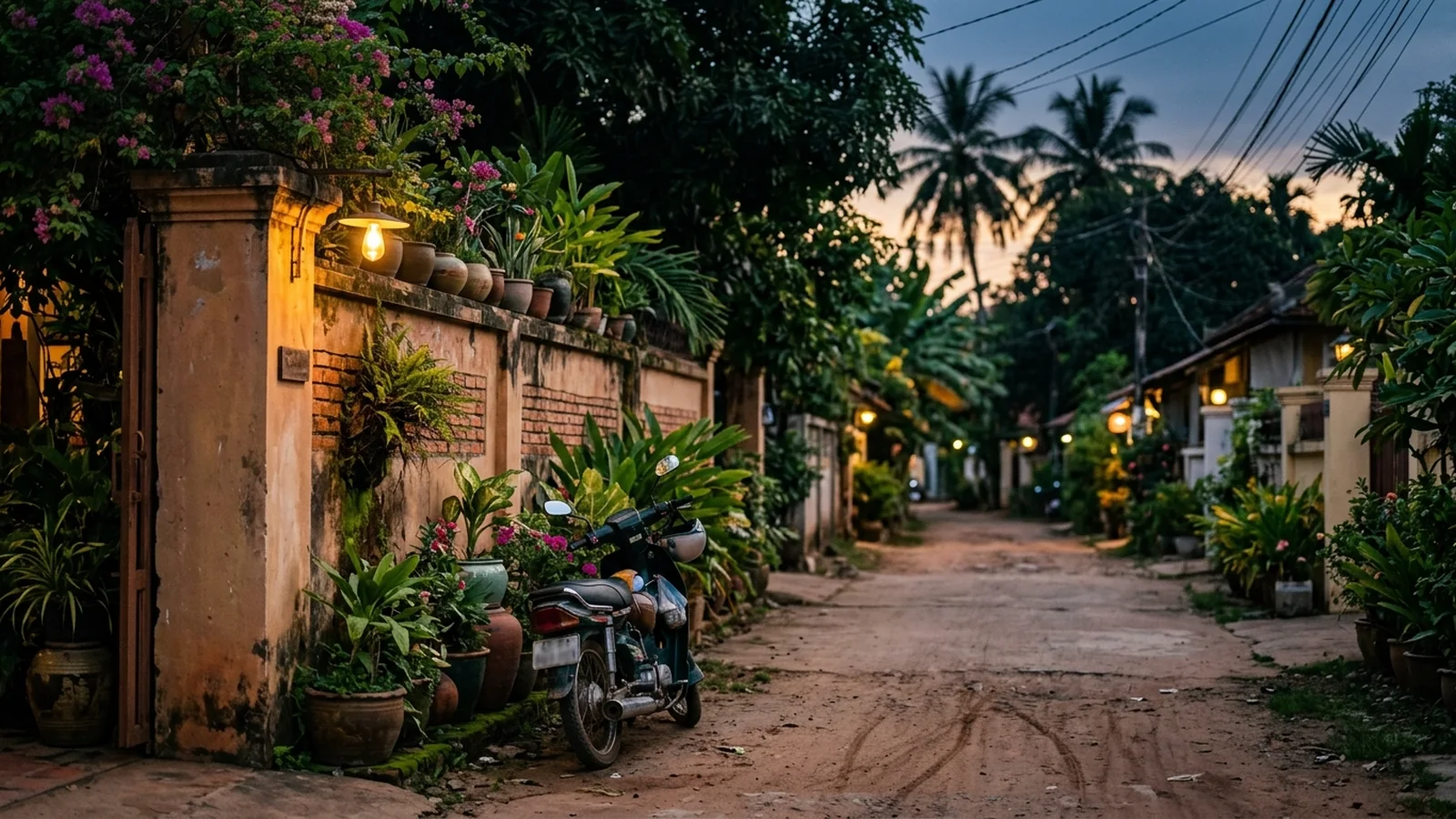
Siem Reap is a small, walkable town built around tourism, and for most visitors and residents most days pass without incident. But "calm most days" is not the same as "risk-free", and the honest answer to "is it safe?" is: it is safe enough to enjoy with normal precautions, provided you understand the specific risks that exist here and plan for the fact that emergency services are thinner than at home.
Australia's Smartraveller service, updated 22 September 2026 and current at 4 October 2026, advises travellers to "exercise a high degree of caution" in Cambodia overall, citing "recent armed conflict and related security risks". That is a level-two advisory: not "reconsider your need to travel", but not routine either. Anyone telling you Cambodia is a zero-risk destination is selling something.
The one thing to check before you travel north
The same advice includes a hard "do not travel" zone: areas within 50 kilometres of the country's north-western land border, across the provinces of Banteay Meanchey, Oddar Meanchey, Preah Vihear, Battambang, Pailin, Pursat and Koh Kong, because of armed conflict across that border and the ongoing presence of landmines and explosive remnants of war. Land border crossings on that route remain closed.
Siem Reap town sits well south of that zone and is not itself a border area, so a normal stay here is not affected. But if your plan involves heading north, an overland border crossing, or a border-region side trip, treat the current advisory map as your reference point and check it again close to departure — this situation has changed at short notice and can change again.
Everyday crime: what actually happens
The dominant street crime in Cambodia is opportunistic theft, not violent robbery. Smartraveller describes "snatch-and-grab" thefts as common: thieves on motorbikes target people walking near the road or riding in open tuk-tuks, sometimes cutting bag straps with a knife. The advice is blunt and worth repeating — be prepared to let your bag go rather than be dragged. Practical habits:
- Carry only what you need for the day; leave passports and spare cards in a safe.
- Walk away from the kerb, with your bag on the side away from traffic.
- In a tuk-tuk, choose one with netting or curtains on the passenger sides and hold your bag inboard.
- Avoid street ATMs where you can; use machines inside banks, malls or hotels.
- Phone snatching from your hand or a café table is the easiest theft of all — keep it out of sight.
There is also a real risk of sexual assault, particularly in tourist areas and at night, and of drink spiking in bars. Smartraveller's guidance is to stay with people you trust, never leave drinks unattended, and pre-arrange transport when going out at night. Serious violent crime is less common but does occur; disputes can escalate and bystanders can be caught up.
Scams worth knowing
Common scams here include taxi and tuk-tuk overcharging, ATM card skimming, counterfeit notes and QR-payment fraud, and "visa assistance" or transport offers from strangers who approach you. There is a harder edge, too: Smartraveller warns that foreigners have been trafficked into Cambodia with fake job offers and forced to work in online scam operations, with restricted movement and mistreatment. Treat any job that pays implausibly well, insists on secrecy, or pressures you to move quickly as a red flag, and never carry a parcel or luggage for someone you have just met.
On the road: the biggest day-to-day risk
If there is one thing to take seriously, it is traffic. Smartraveller notes that fatal road accidents, particularly on provincial highways, are common, and that drink driving is a problem. Ride-hailing is the safer default: both Grab and PassApp operate in Siem Reap, and both quote a fixed fare in the app before you confirm, which removes the negotiation and much of the risk of being overcharged. Avoid travelling at night where you can, and never ride a motorbike after drinking. Our guide to getting around covers scooters, helmets and licences in detail.
Planning for emergencies before you need one
This is where living here differs from visiting: you have to build your own safety net.
- Police: 117. Fire and rescue: 118. Medical emergencies: 119 — but note this works in Phnom Penh; outside the capital you are expected to contact a hospital directly.
- Cambodia's National Police run a 24/7 hotline for foreigners: +855 (0) 31 201 2345 and +855 (0) 31 601 2345, or [email protected].
- Royal Angkor International Hospital, the main private hospital in Siem Reap, operates a 24/7 emergency line on +855 (0) 63 761 888 and +855 (0) 12 235 888.
- Your insurer's 24-hour emergency number is the one you will actually use in a serious incident. Save it, with your policy number, on your phone and on paper.
Comprehensive insurance that covers medical costs and evacuation is not optional here — an emergency abroad can cost thousands before you are reimbursed. Check exactly what your policy says about motorbike riding, pre-existing conditions and evacuation, because those are the clauses that matter. Police stations may not be open 24 hours and officers may not speak English, so always ask for a police report when reporting a crime.
For every traveller
Two specific sets of guidance are worth reading in full before you arrive. Smartraveller publishes advice for women travellers and for LGBTQIA+ travellers, covering risks that can be higher for some people and how to reduce them. If you have accessibility needs, confirm step-free access directly with your specific hotel, clinic and transport provider rather than assuming it — infrastructure here varies widely, and it is a mistake to expect consistency.
How safe you feel here is partly a design problem
Risk in Siem Reap is mostly about avoidance and planning: fewer dark roads, an app instead of a negotiated fare, a saved emergency number, insurance you have actually read. That principle sits behind VillageLife, a project in development in Siem Reap. Memberships and crowdfunding are not open yet. What we are designing is the practical side of a longer stay — dependable power and connectivity, a workspace, and a community we intend to build — so that fewer of the day-to-day unknowns are left to chance. The decisions above are still yours to make.
Sources
- Cambodia travel advice and safety — Australian Government, Smartraveller (checked 2026-10-04)
Page updated 22 September 2026, current at 4 October 2026: overall 'exercise a high degree of caution'; 'do not travel' within 50 km of the north-western land border in seven provinces; land border crossings on that route closed; snatch-and-grab theft common; sexual assault and drink spiking in tourist areas; scams and trafficking warnings; emergency numbers 117 (police), 118 (fire), 119 (medical, Phnom Penh); National Police foreigner hotline +855 31 201 2345 and +855 31 601 2345. - Travel safety for LGBTQIA+ travellers — Australian Government, Smartraveller (checked 2026-10-04)
General guidance for LGBTQIA+ travellers linked from the Cambodia page; advises researching local laws, attitudes and risks before travel. - Travel safety for women — Australian Government, Smartraveller (checked 2026-10-04)
General guidance for women travellers, linked from the Cambodia page; referenced for pre-arranging transport and staying with trusted company at night. - Royal Angkor International Hospital (official website) — Royal Angkor International Hospital (checked 2026-10-04)
24/7 emergency line +855 (0) 63 761 888 and +855 (0) 12 235 888; network hospital page describes its membership of an international hospital group (BDMS). - Grab Cambodia (official website) — Grab (checked 2026-10-04)
Confirms Grab's ride-hailing service operates in Cambodia; Smartraveller states Grab and PassApp are common in Siem Reap and are often safer than a flagged-down taxi. - PassApp Taxis (official website) — PassApp (checked 2026-10-04)
Confirms PassApp is a Cambodian ride-hailing service offering rickshaws, tuk-tuks and cars; Smartraveller names it, with Grab, as common in Siem Reap.
Sources were opened and checked on the date shown. Rules, prices and services change: confirm the current position with the operator or authority before you rely on a detail.